Perks
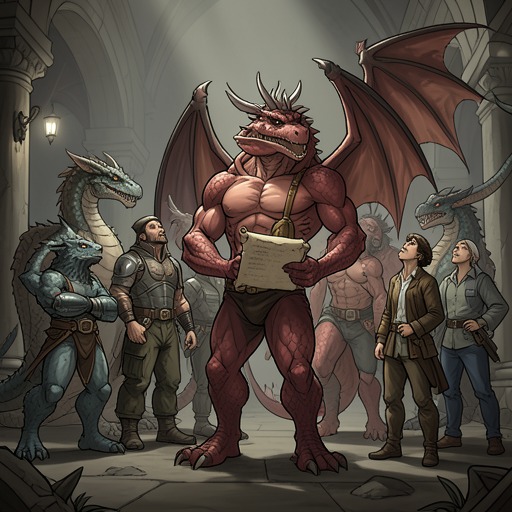
Vainqueur the DragonPerks are the Class System’s mechanisms for turning achievement, identity, and circumstance into lasting advantages. Unlike ordinary equipment or a simple increase in attributes, a perk records why a character has advanced and changes what that character can do thereafter. The system distinguishes between class perks earned through leveling and personal perks acquired by meeting specific criteria, while the story repeatedly shows that these rewards also create debts, privileges, and new expectations.
Definition and Categories
The clearest distinction comes from Victor Dalton’s explanation to Vainqueur Knightsbane. Class perks are obtained by leveling up, whereas personal perks require a character to fit a particular condition; he gives the example of acquiring poison resistance by eating too much poison, an achievement he describes as exceptionally rare. The distinction makes perks more than a second form of statistical growth. Class perks follow the formal progression of a chosen class, while personal perks register behavior or experience that the system considers sufficiently distinctive to reward.
The system can therefore make a character’s identity itself mechanically consequential. Vainqueur Knightsbane gains the Old Money class perk after entering the Noble class through his ego and dragon bloodline. The reward is not an abstract honor: Old Money doubles the chance that monsters will drop treasure after death. His aristocratic self-conception becomes an economic advantage, binding social identity to material accumulation.
Perks as Rewards for Advancement
Perks accompany dramatic changes in level and role. Victor Dalton’s promotion into the Monster Squire class grants him the status of chief enforcer and living signature for a mighty dragon, along with broad increases to his health, spiritual power, strength, vitality, skill, agility, intelligence, charisma, and luck. Later, after fearlessly leading monsters against superior opponents, he gains seven levels in Monster Squire and receives three distinct perks: Monster Lifeforce (Red Dragon), Monster Rider, and Monster Insight. The rewards formalize his transformation from a vulnerable human servant into someone whose survival and authority are tied to Vainqueur Knightsbane’s monster domain.
This progression exposes the system’s characteristic logic. Actions that might conventionally be understood as loyalty, administration, or battlefield courage are translated into class advancement, and advancement is translated into both numerical growth and new capabilities. The notifications make causality explicit: service produces levels, leadership produces perks, and the resulting powers authorize further service and leadership.
Practical Use and Material Exchange
Perks also govern how characters understand and exploit treasure. Victor Dalton’s Eye for Treasure allows him to identify magical items and assess their value, making him useful as Vainqueur Knightsbane’s retriever and financial administrator. Vainqueur initially treats the perk as another function of the Monster Squire class, but the conversation clarifies that it belongs to the wider perk structure rather than being reducible to equipment. His knowledge lets him catalogue magical goods, while Vainqueur’s own perks increase the likelihood that those goods will exist to be collected.
The asymmetry between the dragon and his minion gives these advantages a social dimension. Vainqueur Knightsbane cannot wear certain items himself, yet he loans usable treasures to Victor Dalton while presenting the arrangement as proof of his limitless generosity. Victor bows in thanks, and the loan becomes an instrument of hierarchy: the perk-enabled hoard supplies material power, but access to that power depends on Vainqueur’s permission.
The same logic appears in the sale of corpses to the Church of Camilla for necromantic transformation. Victor Dalton negotiates and signs the contract as the legal living relative, while Vainqueur Knightsbane focuses on the growth of his hoard and orders that Victor receive a fee of eight gold coins. When Victor expects one-tenth of the sales, Vainqueur deliberately interprets the payment as one one-tenth. Perks do not replace older systems of exploitation; they intensify them by making productivity, treasure, and service appear as quantifiable rewards within a larger economy of command.
Limits, Conditions, and Rule Enforcement
The system’s rewards are bounded by explicit ceilings. After reaching level thirty, Vainqueur Knightsbane is warned that he can no longer gain additional levels until he uses a Crest. Experience gains fall to zero, although special deeds can still produce perks. This rule separates ordinary progression from exceptional recognition: the level ladder stops, but the system leaves open another route to advancement through extraordinary actions.
The requirement of awareness also establishes that perks and classes are not equally available to everyone. When Icefang challenges the existence of the system and demands that it appear, Nostredame explains that the first level requires awareness of the system as well as the statistical criteria for beginner classes. The subsequent appearance of invisible text before Icefang confirms that access depends not simply on power, but on recognition and eligibility. The system thus presents itself as universal while retaining gates that determine who can perceive and activate its opportunities.
Narrative and Thematic Significance
Perks function as a game-like grammar for the book’s satire of power and wealth. Vainqueur Knightsbane’s Old Money reward makes aristocratic pride literally profitable; Victor Dalton’s Monster Insight and Monster Rider rewards convert dangerous loyalty into expertise and authority; and the level ceiling turns progress into a scarce resource that must be unlocked through a Crest or exceptional deeds. The system repeatedly gives numerical or technical form to relationships that would otherwise remain ambiguous.
At the same time, perks expose the difference between formal reward and lived consequence. A perk may grant protection, treasure, or recognition, yet the surrounding exchange can produce dependence. Vainqueur Knightsbane’s revival of Victor Dalton and the later payment for Victor’s revival on Outremonde are treated through the language of cost, donation, and reimbursement. After his return, Victor learns that his life is entangled with an enormous debt of twelve million, five hundred forty-five thousand, one hundred thirty-three gold coins, added to the life debt owed for his resurrection and elevation as chief of staff. The system’s reward structure therefore echoes the story’s broader economy: every benefit can become an obligation, and every gift can be recast as an asset on a ledger.
Perks are consequently both empowering and disciplinary. They offer spectacular shortcuts to strength and survival, but they also classify conduct, reward narrow forms of usefulness, and encourage characters to interpret loyalty, identity, violence, and generosity as transactions. Their deepest significance lies in that double action: they make the fantasy world more legible through rules while revealing how easily rules turn people and relationships into measurable property.